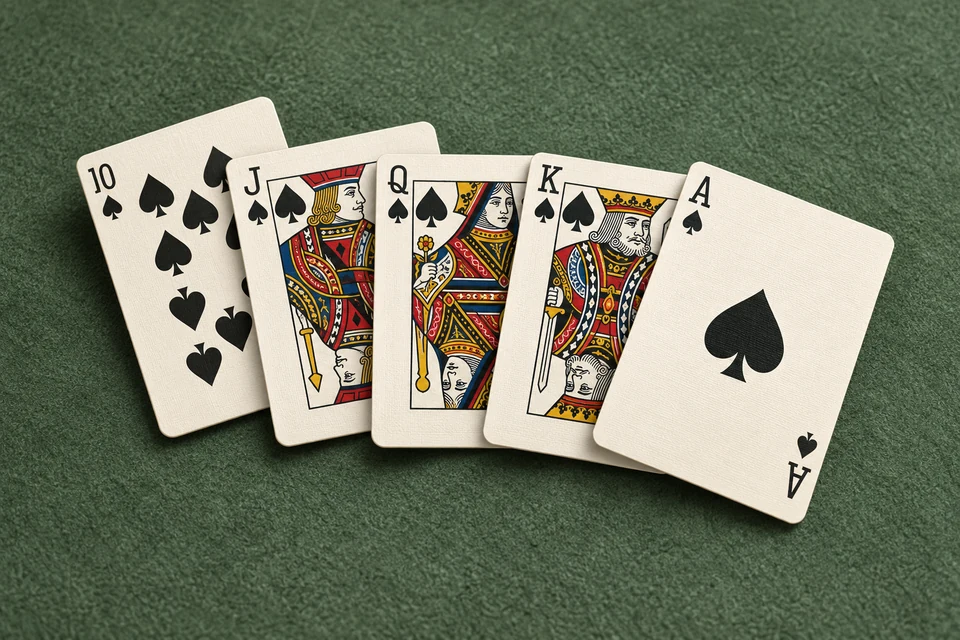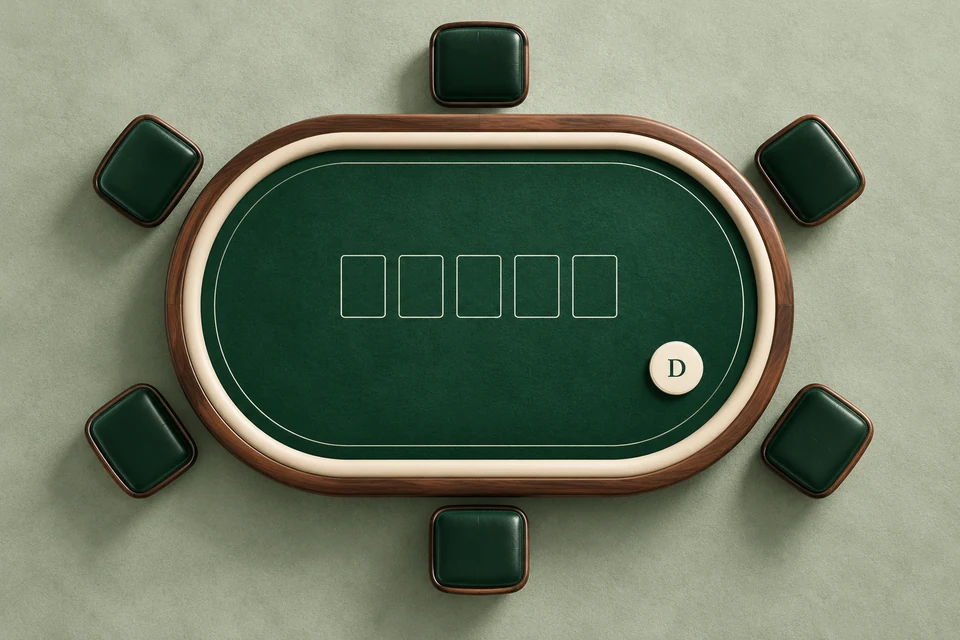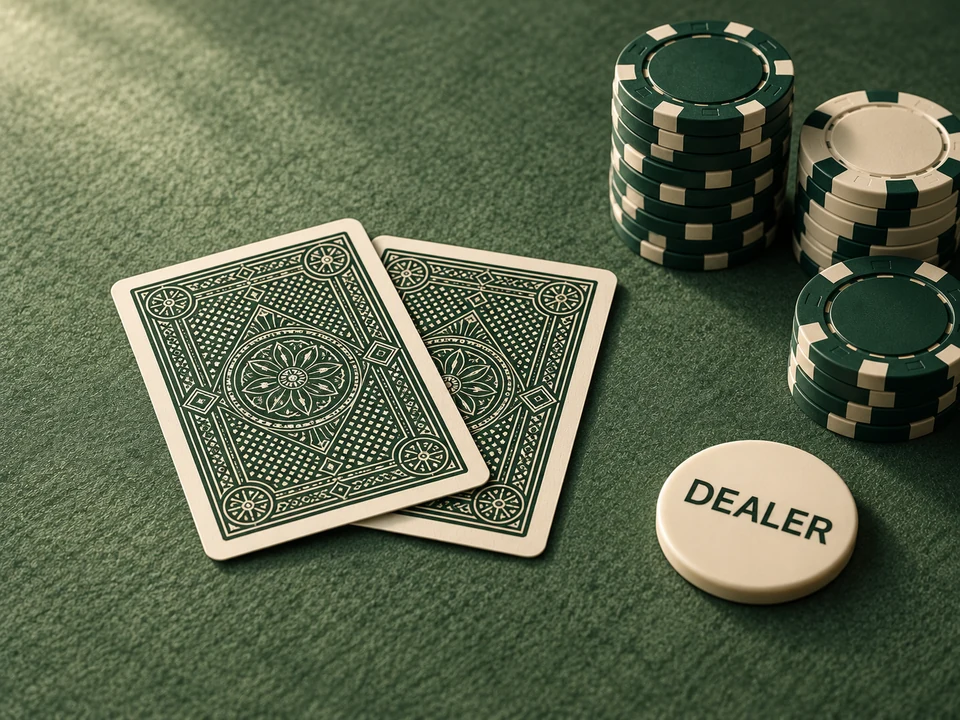
The aim of the game
Make the best five-card hand available, or win the pot when every other player folds. Hold’em combines two cards dealt privately to each player with a shared board that can eventually contain five cards.
The simple version
Your best five cards count.
In Texas Hold’em, you can use both, one or neither of your hole cards.
From the deal to the river

The cards in this sequence diagram are shown face down to distinguish the groups. In play, the flop, turn and river are dealt face up; each player’s hole cards remain private until shown.
01 Before the flop
Each player receives two private cards. The first betting round begins.
02 The flop
Three community cards are dealt face up, followed by another betting round.
03 The turn and river
A fourth card, then a fifth, each followed by a betting round.
04 The showdown
If more than one player remains, compare the best five-card hands.
Follow the action
A dealer button marks the nominal dealer position. With three or more players, the next two seats clockwise normally post the small and big blinds before the cards arrive. These forced bets start the pot. The player after the big blind acts first before the flop; after the flop, action starts with the first remaining player clockwise from the button.
On your turn, the available choices depend on the betting. Check passes the action without a bet when you have nothing to call. Bet opens the betting. Call matches an outstanding amount; raise increases it. Fold gives up your claim to the pot.
A round finishes when the remaining players have met the required action: they have matched the betting or are all-in, or everyone has checked. If only one player remains, the hand ends immediately. The board does not have to reach the river.
One hand, one combination
Imagine you hold A♠ K♠. The flop is A♦ 7♣ 2♥, the turn is 9♠ and the river is K♦. By the river you can make A♠ A♦ K♠ K♦ 9♠: two pair, aces and kings, with a nine.
The other two board cards do not become extra tiebreakers. Compare only that best five-card combination. Nor does your spade suit give a flush: only three spades are available across your cards and this board. A flush needs five.
Showdown and the pot
When the final betting finishes with several players still in, eligible hands are compared. Identical best five-card hands tie. A player who has committed all their chips can remain eligible for a main pot, while further betting may create side pots between other players.
With only two players, the button posts the small blind, acts first before the flop and last afterwards. This is a useful exception to remember when reading position at the table. Dealing procedures, showdown order and betting limits should always be checked against the actual game’s rules.