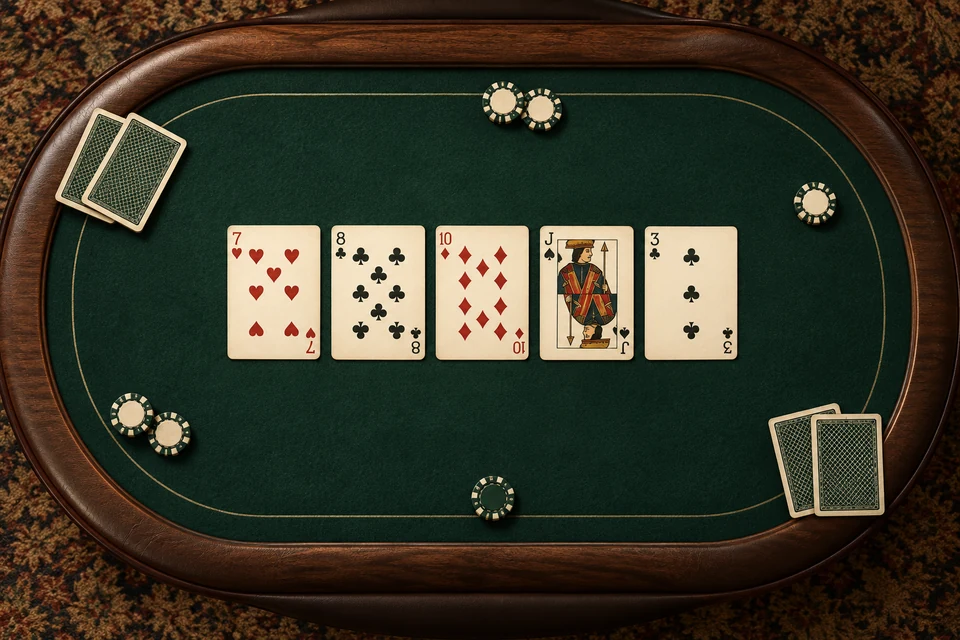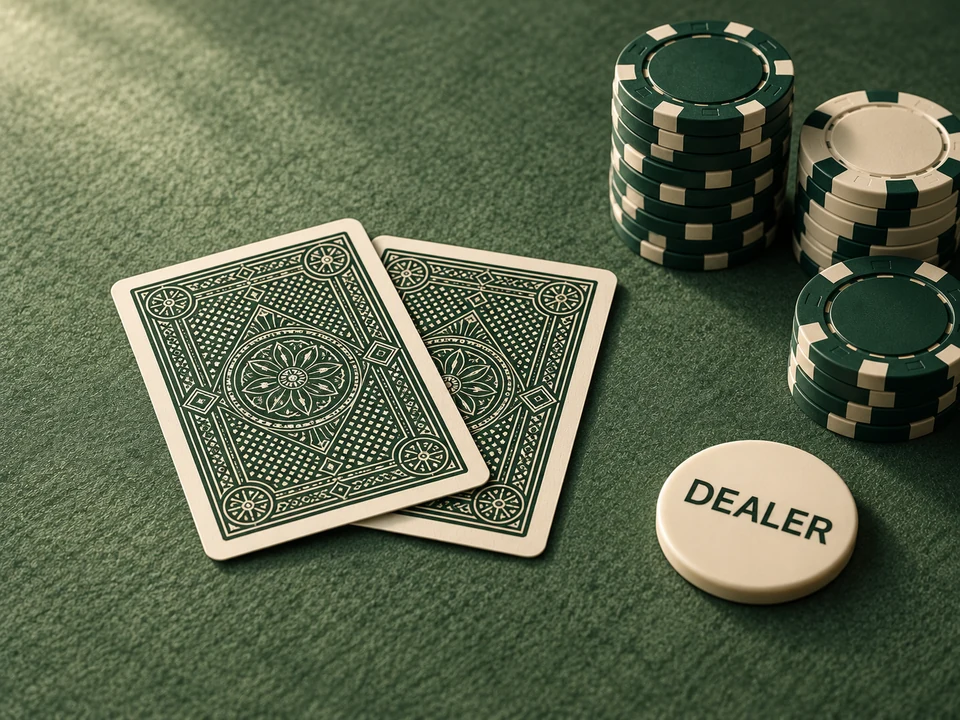
Start with the button
Position describes where you sit in the order of action. It is measured relative to the dealer button, rather than a fixed chair. As the button moves, the same seat can be early in one hand and late in another.
The distinction matters because a player acting later can see decisions made earlier in that betting round. A check, bet, call or raise is information, even though it never reveals an opponent’s exact cards. You make your decision with more of the current action already visible.
Before the flop
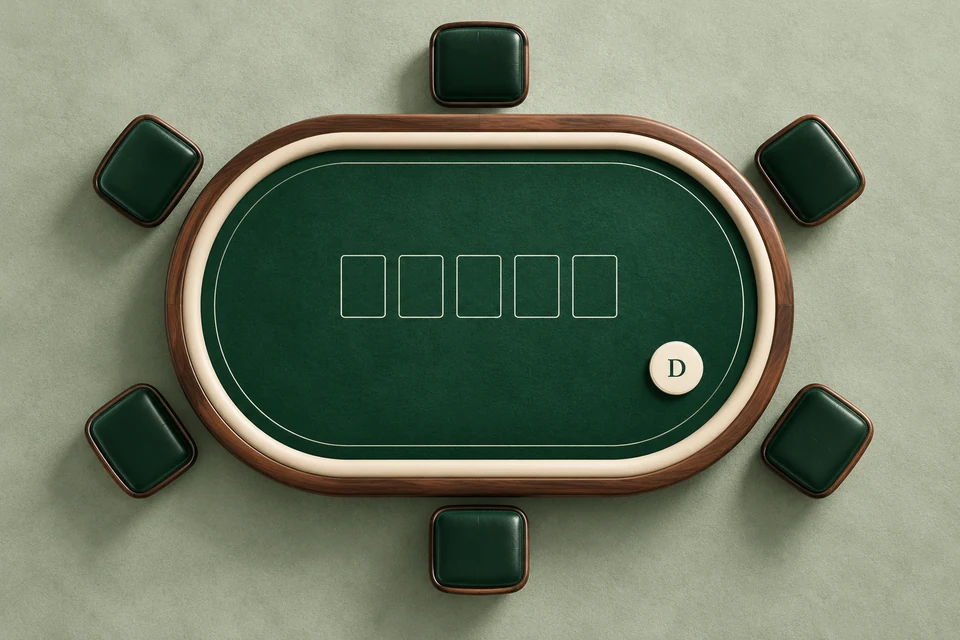
With three or more players, the first pre-flop action normally belongs to the seat immediately clockwise from the big blind. This position is called under the gun. Action continues clockwise, passing the button and small blind before reaching the big blind.
At a full six-player table, a common sequence is under the gun, hijack, cutoff, button, small blind and big blind. The cutoff is immediately before the button. Names for the middle seats vary with table size; the position of the button and the actual action order are more useful than memorising labels alone.
Posting the big blind does not automatically finish that player’s action. If no one has raised, the big blind can normally check or raise when the action comes round. A blind is an existing contribution to the betting, rather than an instruction to sit out the decision.
After the flop
On the flop, turn and river, action begins with the first active player clockwise from the button. With everyone still in, that is the small blind. If the small blind has folded, move to the next active seat. The button acts last whenever that player remains in the hand.
You are in position against an opponent if you act after them. You are out of position if you act first. These terms describe a relationship: the cutoff can be in position against the blinds but out of position against the button in the same hand.
What changes when you act later?
Suppose only the big blind and button reach the flop. If the big blind checks, the button knows no flop bet has been made before choosing an action. If the big blind bets, the button instead faces a specific amount to call, raise or fold against. The available decision has changed before the button acts.
Reverse the seats and you lose that preview. Acting first means choosing without knowing whether the other player will check behind or bet. This explains why the same cards can create a different decision from a different position. It does not turn a late seat into a guarantee of winning.
Position also does not make every check weak or every large bet strong. Those actions can have several explanations. Treat them as part of the situation alongside the board, earlier betting and the chips still available.
The two-player exception
Heads-up Hold’em uses a different pre-flop order: the button posts the small blind and acts first. The big blind acts first after the flop, so the button then has position. Mixing this up with the usual multi-player sequence is a common source of confusion.
A simple review method
When looking back at a hand, mark the button, identify the blinds and list the active players clockwise. Then write the first and last player to act on each street. Separate the order from whether anyone won the pot. It is possible to have an information advantage and still lose the hand.